
Plastic pollution has become one of the most pressing environmental issues of our time. From single-use packaging to everyday household items, plastic is deeply embedded in modern life — but it comes at a steep cost to our planet. Oceans, soil, and wildlife are suffering under the weight of billions of tons of plastic waste that will take centuries to decompose. In the face of this challenge, eco-conscious individuals and industries alike are turning toward sustainable materials that can replace plastic in our daily routines. Among these alternatives, bamboo stands out as one of the most versatile, renewable, and environmentally friendly resources available.
Embracing bamboo substitutes isn’t just about swapping one material for another — it’s about transforming habits, reducing waste, and rethinking how we live. From kitchenware and personal care items to construction materials and textiles, bamboo offers durable, biodegradable, and beautiful solutions that contribute to a cleaner planet.
This article explores how you can begin reducing plastic waste with bamboo substitutes, why bamboo is such an effective alternative, and how these simple changes can have a lasting impact on your home and the environment.
Why Plastic Waste Is Such a Global Problem
Plastic has revolutionized the world since its invention, providing convenience, durability, and low cost. However, this same durability means it doesn’t decompose easily — most plastics take hundreds or even thousands of years to break down. The result is a mounting crisis: overflowing landfills, microplastics in our food chain, and oceans filled with debris that harm marine life.
According to environmental organizations, more than 300 million tons of plastic are produced each year, and half of it is designed for single use. Straws, cutlery, packaging, and disposable bottles are used for minutes but remain in the environment for centuries.
Reducing our reliance on plastic requires systemic change, but it also begins at home. Every choice — from what we eat with to how we brush our teeth — contributes to the collective environmental footprint. That’s where bamboo, a fast-growing, renewable resource, offers hope.
The Power of Bamboo as a Sustainable Material
Bamboo is not a tree but a type of grass that grows incredibly fast — some species can shoot up more than 90 centimeters (35 inches) in a single day. It requires no fertilizers, very little water, and regenerates naturally after being harvested, making it one of the most sustainable plants on Earth.
When used to replace plastic, bamboo provides several environmental advantages:
- Renewable and biodegradable: Bamboo decomposes naturally within months, unlike plastic which persists for centuries.
- Minimal environmental impact: It grows without pesticides, restores soil health, and produces 35% more oxygen than an equivalent stand of trees.
- Durability and versatility: Stronger than many hardwoods, bamboo can be crafted into everything from toothbrush handles to flooring and textiles.
- Carbon sequestration: Bamboo absorbs large amounts of CO₂, helping offset emissions during its lifecycle.
These characteristics make bamboo not only a viable substitute for plastic but also a key player in sustainable development and climate action.
Everyday Bamboo Substitutes for a Plastic-Free Lifestyle
One of the easiest ways to begin reducing plastic waste with bamboo substitutes is to replace small, everyday items. These switches are simple yet impactful when adopted consistently.
Bamboo Toothbrushes
Plastic toothbrushes are among the most common plastic waste items found on beaches and in landfills. A single person might use around 300 toothbrushes in their lifetime, most of which never decompose. Bamboo toothbrushes offer a sustainable solution — with biodegradable handles and recyclable bristles (often made of nylon or plant-based materials).
Choose toothbrushes with compostable handles and recyclable packaging. Once worn out, you can remove the bristles and compost the handle, returning it safely to nature.
Bamboo Straws
Plastic straws are lightweight and difficult to recycle, making them a leading cause of marine pollution. Bamboo straws are sturdy, reusable, and naturally antimicrobial. They can be washed and used for months or even years. Many people carry them in eco-friendly pouches to use at cafés, picnics, or during travel.
When they eventually wear out, bamboo straws can be composted — leaving no trace behind.
Bamboo Cutlery
Single-use plastic utensils are used for minutes but linger for generations. Bamboo cutlery sets offer a zero-waste solution that’s lightweight, reusable, and perfect for lunch boxes or travel.
These sets usually include forks, knives, spoons, and even chopsticks. They can be rinsed easily and dried for future use, making them ideal for picnics or office lunches.
Bamboo Food Containers and Bowls
Instead of plastic storage containers, bamboo and bamboo-fiber kitchenware can keep food fresh while maintaining a natural aesthetic. Bamboo bowls and lunch boxes are durable, safe for dry foods, and often come with natural resin coatings.
They’re an excellent choice for eco-conscious households that want to avoid microplastics leaching into food.
Bamboo Toothpicks and Cotton Swabs
Though small, these items have a massive collective impact. Plastic cotton swabs and toothpicks often end up in waterways and harm marine life. Bamboo alternatives are fully compostable, breaking down quickly without environmental harm.
Bamboo in Personal Care and Beauty Products
The beauty and personal care industry contributes significantly to plastic pollution through packaging and disposable tools. Replacing these with bamboo alternatives makes a noticeable difference.
Common bamboo-based personal care items include:
- Hairbrushes and combs: Bamboo bristles reduce static and breakage while being biodegradable.
- Reusable cotton pads with bamboo fabric: Soft, washable, and long-lasting, they replace hundreds of disposable makeup wipes.
- Bamboo razors: Designed with replaceable steel blades, these offer a zero-waste shaving experience.
- Bamboo soap dishes: Naturally water-resistant and mold-resistant, they extend the life of bar soaps.
These swaps not only reduce waste but also add a natural, minimalist touch to your bathroom.
Bamboo in the Kitchen and Dining Room
The kitchen is one of the most plastic-intensive areas of any home, making it an ideal place to introduce sustainable changes.
Practical bamboo swaps for your kitchen:
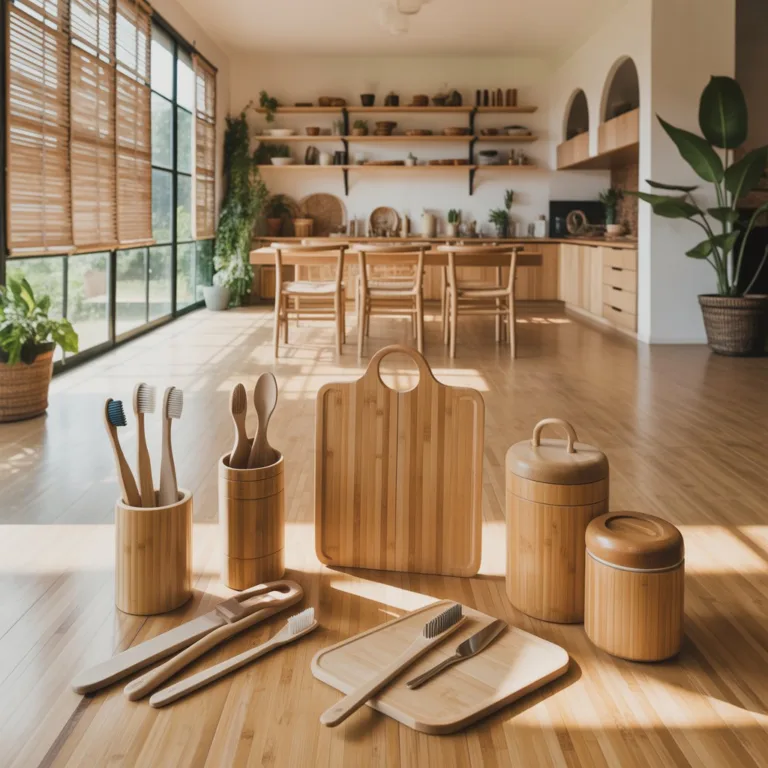
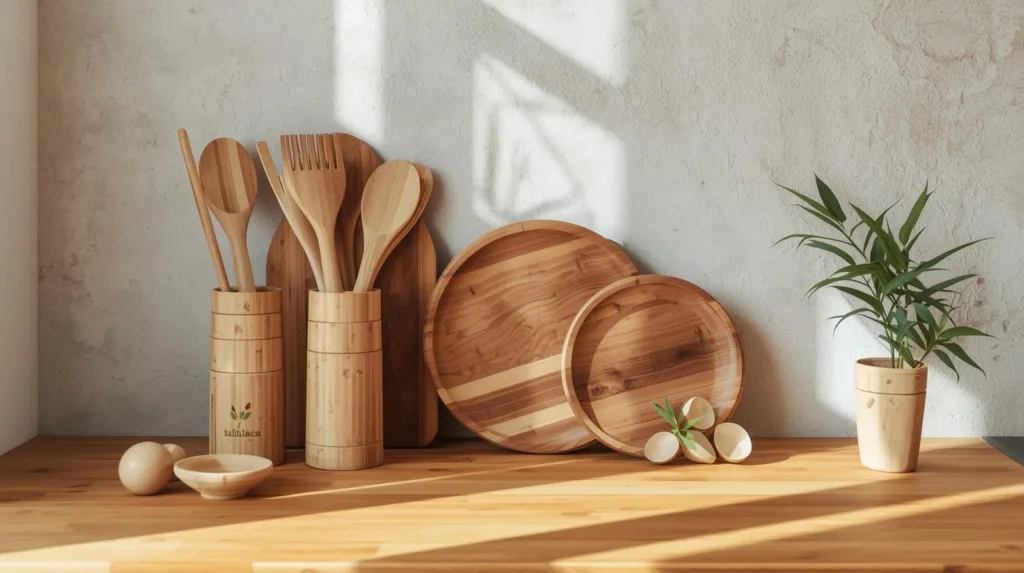
- Cutting boards: Bamboo boards are lightweight, durable, and resistant to knife scarring.
- Cooking utensils: Spoons, spatulas, and tongs made from bamboo won’t scratch cookware and resist stains.
- Reusable coffee cups: Bamboo fiber cups with silicone lids replace disposable coffee cups and are easy to clean.
- Bamboo paper towels: Reusable and machine-washable, they reduce single-use paper and plastic packaging.
By slowly replacing plastic tools with bamboo ones, you reduce waste while maintaining a stylish and functional kitchen.
Bamboo in Fashion and Textiles
Beyond the kitchen, bamboo has made its way into fashion and textiles. The plant’s fibers can be processed into soft, breathable fabric used for clothing, bedding, and towels.
Advantages of bamboo fabric:
- Soft and breathable: Comparable to cotton but smoother and naturally antibacterial.
- Moisture-wicking: Ideal for activewear and undergarments.
- Sustainable production: Requires less water than cotton and grows without chemicals.
From bamboo socks and t-shirts to eco-friendly bedsheets, bamboo textiles combine comfort and sustainability, making them a smart choice for environmentally conscious consumers.
Construction and Interior Design with Bamboo
Bamboo’s incredible strength and flexibility make it a popular choice in sustainable architecture and design. It’s stronger than steel in tensile strength and more resilient than concrete under certain conditions.
Common applications include:
- Flooring and wall panels
- Furniture and décor
- Eco-homes and temporary shelters
- Acoustic insulation materials
Because it’s lightweight and rapidly renewable, bamboo reduces the environmental footprint of construction projects. Architects around the world are exploring bamboo as a major building material for a more sustainable future.
Challenges and Considerations
While bamboo offers a wealth of benefits, it’s not without challenges. Some bamboo products undergo chemical processing, especially when converted into fabric or composite materials. To ensure your choices remain environmentally sound:
- Look for certifications like FSC (Forest Stewardship Council) or OEKO-TEX for sustainable sourcing.
- Avoid chemically treated bamboo or those with plastic-based coatings.
- Choose local or fair-trade producers when possible to reduce shipping emissions and support responsible manufacturing.
Responsible sourcing ensures that bamboo’s sustainability promise remains intact.
The Broader Impact of Choosing Bamboo
The environmental benefits of bamboo extend far beyond individual households. Widespread adoption can influence industries to move away from fossil fuel–based plastics and encourage sustainable manufacturing practices.
By choosing bamboo substitutes, consumers send a powerful message: that eco-friendly options are not just niche — they are necessary. Over time, this demand encourages innovation, investment in green materials, and more affordable sustainable products for everyone.
Moreover, bamboo cultivation supports rural economies in many parts of the world. It provides jobs, prevents soil erosion, and contributes to local biodiversity. Supporting this industry ethically benefits both people and the planet.
Reducing Plastic Waste Beyond Bamboo
While bamboo is an excellent alternative, it’s also essential to embrace a broader waste-reduction mindset:
- Reduce consumption: The best waste is the one that’s never created. Buy only what you truly need.
- Reuse and repair: Extend the lifespan of products before replacing them.
- Recycle correctly: Learn about your local recycling programs to ensure proper sorting.
- Compost: Return organic materials to the earth rather than to landfills.
Bamboo substitutes are one tool in the larger sustainability toolbox, helping us transition from a disposable culture to one that values longevity and regeneration.
Making the Shift Toward a Greener Home
Transitioning to bamboo doesn’t have to happen overnight. Start small — replace your toothbrush or cutlery set, then move on to larger swaps like storage containers or kitchen tools. Every replacement reduces your plastic footprint and sets an example for others to follow.
When you hold a bamboo product in your hands, you’re not just using a sustainable material — you’re participating in a global movement toward conscious living. Each choice reflects care for the planet, for future generations, and for the delicate ecosystems that sustain us.
Crafting a Future Without Plastic
The journey toward reducing plastic waste with bamboo substitutes is about reimagining how we live — reconnecting with natural materials, slowing down consumption, and prioritizing sustainability. Bamboo shows us that beauty, functionality, and environmental responsibility can coexist seamlessly.
By integrating bamboo into everyday life, we cultivate a habit of mindfulness and stewardship. We prove that small, consistent actions — like choosing a bamboo toothbrush or reusable straw — can weave together to form a powerful, planet-saving impact.
Each time you replace plastic with bamboo, you take a tangible step toward a cleaner, greener world.

Elena Mora is a creative educator and eco-craft enthusiast who specializes in bamboo musical instruments and sustainable toys for children. She believes that hands-on learning through play teaches kids about creativity, music, and environmental responsibility.