
In today’s fast-paced, consumer-driven world, handmade toys offer something truly special — creativity, connection, and consciousness. When you build a toy with your own hands, you’re not just making a plaything; you’re crafting a story, one that blends imagination, sustainability, and skill. Among the most engaging eco-friendly projects, few are as rewarding as building toy cars from bamboo and bottle caps.
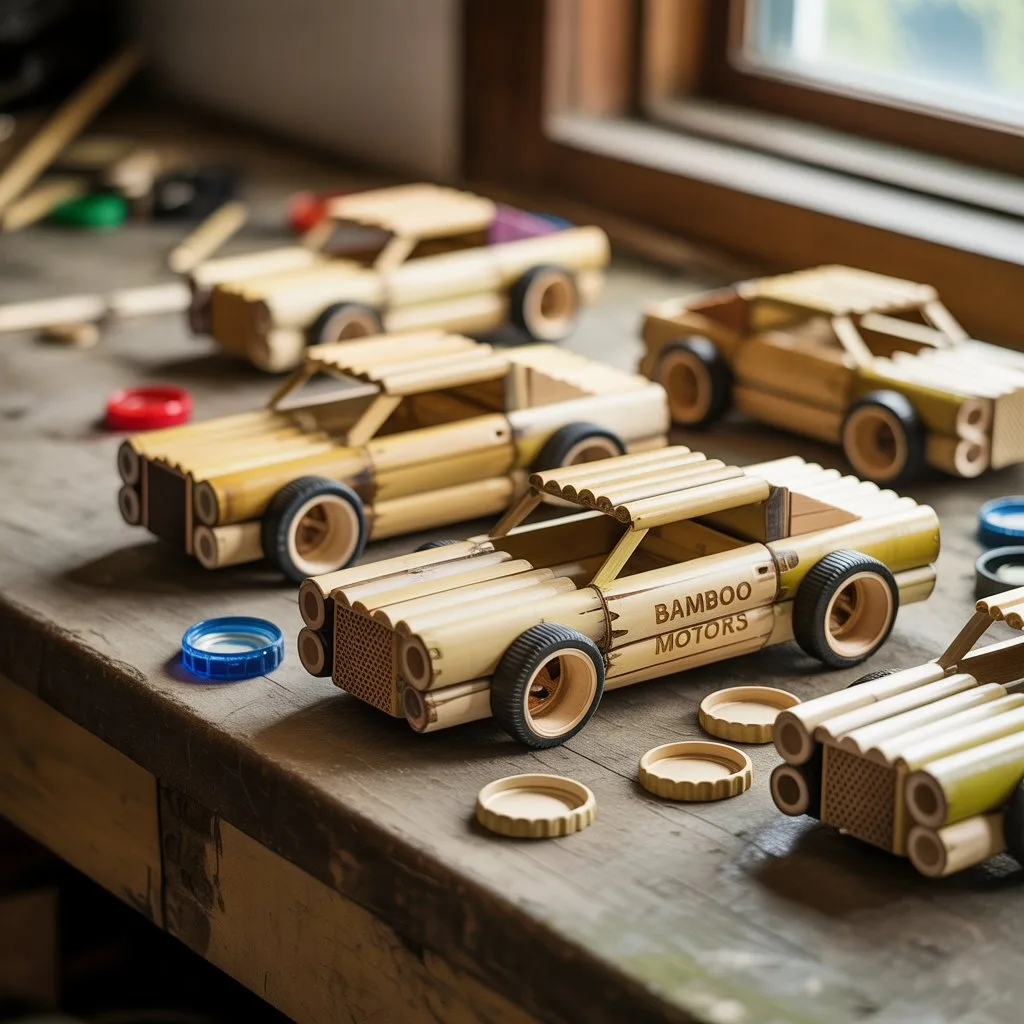
This activity brings together two simple yet powerful ideas: reusing what we already have and embracing natural materials. By combining bamboo — one of the most sustainable resources on the planet — with everyday bottle caps that might otherwise end up as waste, you create something both playful and purposeful. The result is a toy that rolls smoothly, inspires curiosity, and sparks conversations about creativity and environmental responsibility.
Why Bamboo and Bottle Caps Are Perfect Partners
Bamboo and plastic bottle caps may seem like an odd pair at first, but together they form a surprisingly ideal combination for homemade toys. Bamboo’s natural strength and flexibility make it perfect for crafting durable bodies and frames, while plastic caps serve as lightweight, sturdy wheels.
Beyond functionality, this pairing symbolizes the harmony between natural and recycled materials — one renewable, the other repurposed. It’s a simple yet profound lesson in sustainable design: when we look at common objects differently, we find opportunities for creativity and change.
The Sustainability of Bamboo
Bamboo is often called “the miracle grass,” and for good reason. It grows incredibly fast — some species can shoot up over a meter in a single day — and regenerates without replanting. Unlike hardwood trees, which can take decades to mature, bamboo can be harvested sustainably every few years.
It’s also biodegradable, lightweight, and exceptionally strong, making it ideal for eco-friendly crafts. Using bamboo in toy-making reduces dependence on plastics and deforestation, teaching children that beautiful things can come from renewable resources.
The Value of Recycled Materials
Bottle caps are one of the most common forms of plastic waste, often overlooked because of their small size. Yet millions of them end up in landfills and oceans every year. Transforming them into wheels for bamboo toy cars gives them a second life and reduces environmental impact.
This creative reuse not only saves materials but also introduces kids to the idea that waste can be a resource — a cornerstone concept of sustainability and circular design.
Preparing to Build: Gathering and Treating Materials
Before you begin building toy cars from bamboo and bottle caps, it’s important to gather your materials and prepare them properly. Working with natural and recycled components teaches patience and care — two essential traits in any creative process.
Materials You’ll Need
- Bamboo sticks or thin bamboo tubes: These form the main body and axles. Choose pieces about 20–30 cm long for a small car.
- Bottle caps: Four of the same size make balanced wheels.
- Thin metal rods or wooden skewers: Used for axles to connect the wheels.
- Small hand drill or heated nail: For making holes in the bamboo and bottle caps.
- Sandpaper: To smooth bamboo edges.
- String, glue, or tape (optional): To reinforce parts or add decorations.
- Paint or natural finish (optional): To personalize and protect the toy.
Choosing the Right Bamboo
The best bamboo for this project is young but dry — firm enough to hold its shape, yet easy to cut. Avoid bamboo that’s cracked, splintered, or still green, as it can shrink and warp as it dries.
You can use leftover bamboo from garden stakes, furniture scraps, or craft supplies. If you cut fresh bamboo, let it dry in a shaded, ventilated space for a few days before using it.
Cleaning and Preparing Bottle Caps
Before reusing bottle caps, wash and dry them thoroughly. Remove any labels or rubber linings if possible. If you’re using caps from plastic bottles of different colors, you can create a fun mix-and-match design — one car might have red front wheels and blue back ones, for instance.
For smoother rotation, make small holes exactly in the center of each cap. A hand drill or heated nail works well for this, but always use caution — especially if children are involved in the process.
Crafting the Toy Car Body
The main body of your bamboo toy car serves as its foundation. Depending on the shape of the bamboo, you can create either a sleek single-tube design or a more elaborate frame with separate parts joined together.
Creating the Frame
If you’re using a single bamboo tube, simply smooth the outer surface with sandpaper and make sure both ends are even. For more advanced builders, you can cut the bamboo into three pieces — a central body and two thinner sticks to serve as axles — and connect them using holes or natural fiber ties.
Drill small holes near the bottom of the main body where the axles will go through. These holes should align perfectly so that the car rolls straight.
If the bamboo piece is hollow, you can even decorate the inside by adding small pebbles or seeds that rattle when the car moves — turning it into a musical toy as well.
Attaching the Wheels
Insert the axle rod through the drilled holes in the bamboo and slide a bottle cap on each end. Secure them with a small drop of glue or melted wax if necessary. Make sure the wheels spin freely — the smoother they rotate, the better your car will move.
At this stage, you can test the car’s mobility by gently pushing it on a flat surface. If it wobbles, check that the caps are evenly positioned and the holes are symmetrical.
Adding Personality: Decorating and Customizing
The most enjoyable part of building toy cars from bamboo and bottle caps is personalizing them. This is where creativity takes the wheel — literally.
Children can paint their bamboo cars using eco-friendly paints, add stickers, or wrap them in natural fibers. Adults might prefer a polished look using beeswax or linseed oil, which enhances bamboo’s golden tone and provides a smooth finish.
Ideas for Unique Designs
- Animal-inspired cars: Paint stripes for a tiger car or spots for a ladybug version.
- Nature theme: Wrap leaves or small vines around the body for a forest-inspired look.
- Racing style: Use bright colors, numbers, or checkered patterns for a classic racecar vibe.
- Cultural twist: Decorate using patterns inspired by local art or traditional motifs.
Encouraging children to personalize their toy cars develops artistic expression and a sense of ownership. Every car becomes a reflection of its maker’s imagination.
Teaching Opportunities: Learning Through Craft
This project isn’t just fun — it’s deeply educational. Building toy cars from bamboo and bottle caps introduces principles of design, physics, sustainability, and teamwork.
Teachers and parents can use it to explore topics like motion, friction, and renewable materials. It also fosters problem-solving: figuring out how to make the car roll straight, stay balanced, or go faster challenges critical thinking in a playful way.
Understanding Movement and Mechanics
By adjusting the axle length or wheel size, kids can see how these factors affect movement. A car with wider axles, for example, tends to be more stable, while narrower ones may move faster but wobble more.
This hands-on exploration helps children grasp mechanical concepts naturally, without needing formal instruction. It transforms science into something tangible, interactive, and memorable.
Cultivating Environmental Awareness
Using bamboo and recycled materials introduces eco-conscious habits early on. When kids see how waste can turn into something useful and beautiful, they begin to rethink their relationship with the environment.
Projects like this help shape a generation that values sustainability and innovation — essential qualities for solving tomorrow’s environmental challenges.
Expanding the Project: Creative Variations
Once you master the basics of building toy cars from bamboo and bottle caps, the possibilities become endless. You can scale the design, add accessories, or experiment with new materials.
Bamboo Trucks and Buses
Try making larger vehicles by joining multiple bamboo tubes together. Add more axles for extra wheels and create compartments using hollow sections. These can serve as toy trucks or buses that carry small pebbles or marbles.
Pull Cars with Strings
Attach a string to the front axle or body and turn your creation into a pull-along toy. This variation is great for toddlers and helps develop motor coordination.
Solar or Wind Additions
For an educational twist, integrate small solar panels or pinwheel-style propellers to power movement. This merges traditional craftsmanship with modern science, showing how renewable energy can be applied in everyday life.
Safety and Sustainability Considerations
When crafting with children, safety should always come first. While bamboo and bottle caps are safe materials, the tools used — such as drills or sharp objects — require adult supervision.
Sand all rough edges carefully to prevent splinters, and ensure small pieces are not a choking hazard for young kids.
To maintain environmental integrity, use non-toxic paints and natural adhesives whenever possible. Avoid synthetic glues that release harmful fumes or prevent recyclability later on.
The Joy of Handmade Play
There’s a unique satisfaction in seeing a simple object you’ve crafted roll across the floor. Unlike mass-produced toys, handmade ones carry the marks of time, care, and creativity. Each imperfection adds charm, each design tells a story.
When you spend time building toy cars from bamboo and bottle caps, you’re not just constructing a plaything — you’re nurturing creativity, sustainability, and connection. Children learn to value effort over convenience, and adults rediscover the joy of making something tangible.
Projects like this remind us that fun doesn’t need to come from a store. It can come from a quiet afternoon, a few discarded caps, a stick of bamboo, and the imagination to bring them together.
So gather your materials, clear a workspace, and see what you can create. You might end up not just with a toy car, but with a memory — one that rolls smoothly into the hearts of everyone who shares in the making.

Elena Mora is a creative educator and eco-craft enthusiast who specializes in bamboo musical instruments and sustainable toys for children. She believes that hands-on learning through play teaches kids about creativity, music, and environmental responsibility.